Leonard Upjohn
Of Human BondageLeonard Upjohn is an English literary critic whose role in Cronshaw’s final years culminates in a widely noticed article about the dead poet. He helps secure publication of Cronshaw’s poems, visits him during his decline, and then shapes the poet’s life, care, and funeral into an affecting literary image. The contrast between Upjohn’s elegant account and Philip’s experience makes him a figure through whom the novel examines the power of style to confer posthumous significance—and to obscure the practical failures behind it.
Identity and Literary Standing
Upjohn is a man of letters with a considerable reputation in England as a critic and as an interpreter of modern French literature. He has lived among the writers associated with the Mercure de France and has built his reputation by rendering their perspective in English. His prose is described as a close imitation of Sir Thomas Browne: elaborate, carefully balanced sentences and obsolete, resplendent vocabulary give his writing an appearance of individuality. The distinction between the originality he is credited with and the imitative means by which he achieves it is part of the characterization, not merely a detail of style.
Philip has met Upjohn once or twice with Cronshaw in the cafes of the Latin Quarter and has read some of his articles. Their acquaintance becomes consequential when Upjohn takes an active interest in Cronshaw’s poems. His literary standing gives him access to publishers and reviewers, and later enables his account of Cronshaw to circulate well beyond the small circle of people who knew the poet personally.
Securing Cronshaw’s Poems
Cronshaw’s friends have urged him for years to publish, but he has resisted the labor involved and argued that poetry has no living audience in England. He expects an unknown book to receive only a few dismissive lines, sell a handful of copies, and then be pulped. Fame, in his view, is an illusion. Yet illness and poverty alter the stakes: he can barely earn enough to maintain his drinking, and as death approaches he wants a published book to remain behind him. He also retains a private conviction that he has produced important poetry.
Upjohn takes Cronshaw’s poems and finds enough for a substantial volume. He approaches publishers on the poet’s behalf and reports their refusals, even where they profess admiration for the work. Cronshaw responds by pressing him to make greater efforts. When a publisher finally consents to print the poems, Upjohn persuades Cronshaw to accept ten pounds in advance of royalties. Cronshaw emphasizes that the payment is an advance, comparing it with the sum Milton received up front. The agreement brings him to England and gives him a concrete reason to hope that his work will appear in print; Upjohn also promises a signed article and help from reviewers.
The prospect of publication delights Cronshaw, despite his performance of detachment. He imagines the book making a sensation, while Upjohn’s promise to write about it links the poet’s hope of recognition to the critic who will eventually shape his public image. The arrangement thus serves two purposes: it advances Cronshaw’s long-delayed publication and gives Upjohn a central role in presenting him to readers.
Visits During Cronshaw’s Decline
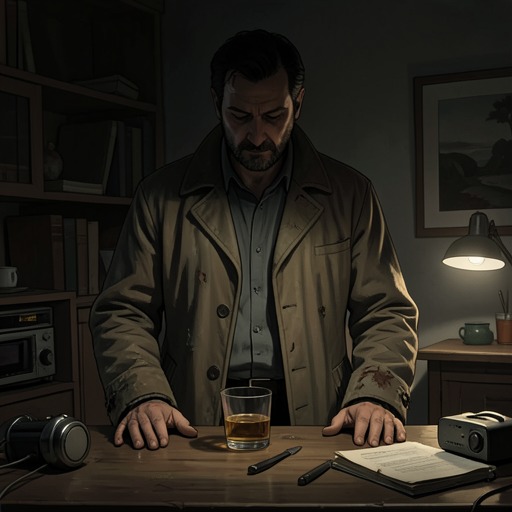
As Cronshaw grows gravely worse, he remains in bed, refuses medical attention, takes little nourishment, and insists on whiskey and cigarettes despite Philip’s warnings. He openly accepts that these habits may be killing him and tells Philip to let him have what he wants. Upjohn visits two or three times a week. His appearance is described in terms of pallor and limited exposure to the open air; his manner, more important to Philip, is patronizing and persistently talkative.
Upjohn speaks fluently about figures such as Rodin, Albert Samain, and César Franck, but Philip finds the conversation tedious. He judges Upjohn a poor listener, someone who does not notice whether others are interested and who repeats what they already know. The difference between Upjohn’s confident literary voice and his attention to people is especially plain in his concern for Cronshaw. He tells Philip that someone ought to stay with the sick poet, warning that the great poet might die without anyone beside him, but he does not offer to arrange or provide that care.
Philip, whose hospital work keeps him away during the day, is left responsible for Cronshaw’s practical needs. Upjohn’s visits bring the poet’s literary importance into the sickroom, but they do not relieve Philip of the daily burden. This discrepancy later matters because Upjohn’s article will represent the last weeks as an episode of sensitive literary devotion, while Philip has experienced them as awkward, demanding care in a modest domestic setting.
The Funeral and the Laurel Wreath
After Cronshaw’s death, Upjohn arrives the next morning with a small laurel wreath. He tries to place it on the dead poet’s bald head, but the wreath fits grotesquely. He then says he will put it over Cronshaw’s heart; Philip observes that it has landed on his stomach. The scene reduces Upjohn’s ceremonial gesture to an incongruity that he cannot quite control: the sign of poetic honor does not settle naturally onto the body it is meant to dignify.
Philip arranges one carriage for the funeral, and he and Upjohn follow the hearse in it. Lawson cannot attend but sends a wreath; Philip buys two more so the coffin will not seem neglected. Their modest acts of attendance stand against Upjohn’s later literary transformation of the ceremony. On the journey back, Philip is exhausted and falls asleep. Upjohn uses the silence to propose delaying publication of the poems and writing a preface. He has begun to think about it during the drive to the cemetery and believes he can make something of it. He then revises the plan: rather than diminish the material by drafting a preface, he will first publish an article in a review and may later use it as the preface.
The proposal turns the funeral into the starting point of a new act of composition. Upjohn’s attention shifts from the unpublished volume to the opportunity to frame Cronshaw’s life for a wider audience. His account will preserve some of the poet’s words and create a moving image of him, but it will also make the story of his final care part of Upjohn’s own literary performance.
The Article and Its Irony
A few weeks later, Upjohn’s article appears and makes a considerable stir; extracts are printed in many newspapers. It is vaguely biographical because Cronshaw’s early life is little known, but its treatment is delicate, tender, and picturesque. Upjohn presents him as an English Verlaine: a poet of the Latin Quarter, talking and writing, whose sordid final circumstances acquire the pathos of a literary legend. His intricate, colored prose gives Cronshaw’s decline a tremulous dignity.
The article’s most pointed transformation concerns the care that preceded the death. Upjohn describes an attempt to transport Cronshaw to a cottage surrounded by honeysuckle in a flowering orchard, and presents the eventual move to the vulgar respectability of Kennington as a well-meaning but tactless failure of sympathy. He recounts Cronshaw’s patience with the young student who appointed himself his nurse, turning Philip’s practical care into an episode of middle-class clumsiness. The account also makes the laurel wreath a beautiful emblem: the dead poet’s hands seem to rest passionately upon Apollo’s leaves, which Upjohn surrounds with ornamental images of art and distant places. In his version, an ordinary funeral becomes the final victory of Philistia over art and beauty.
The irony is that Upjohn’s art succeeds even where his conduct has been limited. His article is called a miracle of charm, grace, and pity, and it gives readers a memorable portrait of Cronshaw. Yet Upjohn prints all of Cronshaw’s best poems within the article, so that much of the forthcoming volume’s force is spent before the book appears. The article advances Upjohn’s own position as well: he becomes a critic to be reckoned with, and readers who had found him aloof encounter in the piece an appealing appearance of human warmth. His achievement is therefore double-edged. He grants Cronshaw a persuasive afterlife in print, while the carefully composed story recasts the circumstances of that afterlife and turns the critic himself into its most visible interpreter.